What is CRB?
The coconut rhinoceros beetle (Oryctes rhinoceros) is a large, invasive insect pest that primarily attacks coconut palms and other types of palm trees. It’s named for its distinctive horn-like projection on the head, which resembles that of a rhinoceros.
- Scientific name: Oryctes rhinoceros
- Native to: Southeast Asia
- Size: Adults are about 3.5–4 cm (1.4–1.6 inches) long
- Appearance: Shiny, dark brown to black with a prominent horn on the male’s head
- Signs of damage:
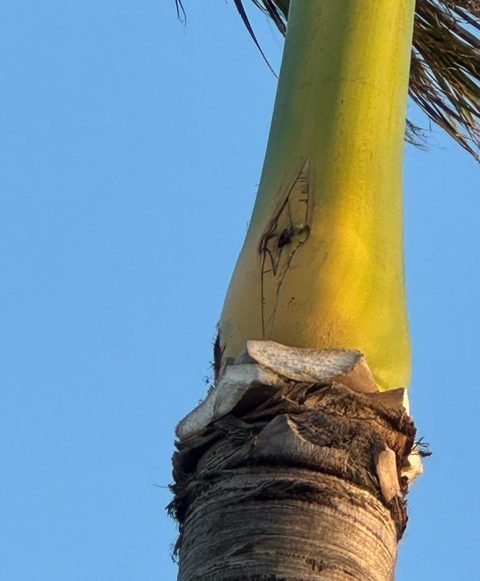
The adult beetle bores into the crowns (tops) of palm trees to feed on sap. This feeding damages growing tissue and can kill the central shoot, leading to:
- Reduced fruit production
- Deformed or stunted leaves
- Tree death in severe cases
- Control measures:
- Sanitation: Removing rotting wood, compost piles, and dead palms to prevent breeding
- Chemical control: Use of specialized equipment to inject tree
Learn how the treatment works—and why it matters.Here’s a quick breakdown of how we treat for Coconut Rhinoceros Beetle:Understanding the Threat
The Coconut Rhinoceros Beetle attacks the crown of your palm by boring into the top where the fronds grow. They can fly 2 to 3 miles and live about a year. The damage comes from adult beetles feeding inside the heart of the palm.
Our Treatment Method
• We drill a small hole into the trunk—usually near the base.
• A systemic insecticide is injected directly into the tree.
• The chemical spreads through the palm’s vascular system, making the tissue toxic to beetles.
• The hole is sealed with a specialized plug.
• Depending on palm size and health, multiple injection points may be used.
• Palms don’t heal like shade trees—once drilled, that area stays damaged. So we minimize drilling and, in some cases, reuse the same site for future treatments.
Want to know More? Visit crbhawaii.org for more info on CRB in Hawaiʻi and the latest research.